About the mandir
In the lanes of Bhaironath, near Vishweshwarganj in the old city of Varanasi, stands the temple of Kaal Bhairav, revered as the Kotwal, the guardian and chief magistrate, of Kashi. Tradition holds that no one may stay in Kashi without his leave, and that a pilgrimage to Kashi Vishwanath is complete only after his darshan. Only the silver face of the deity, garlanded with flowers, is seen through the door of the small sanctum.
History
Kaal Bhairav is one of the old shrines of Kashi named in the Kashi Khanda of the Skanda Purana, and the worship of Bhairava as the guardian of the city is far older than any building that stands today. The age of the present temple is not settled. A study of the city's heritage, citing the scholars Diana Eck and Rana P. B. Singh, records a stone inscription on the back wall of the inner courtyard which says that the Maratha ruler Baji Rao Peshwa II built the present structure in 1817. Other accounts say only that it was raised in the mid 17th century, and one names the Maratha commander Sardar Vinchurkar as its builder. A date of 1715 under Baji Rao Peshwa is also widely repeated, but Baji Rao I became Peshwa only in 1720, so that date does not fit. What the sources agree on is that the temple, like much of old Varanasi, owes its present form to Maratha patronage. The walls of the temple were faced with marble in 1968, and raised seats were added in 1995 for the families who hold rights in the service of the temple.
The Legend of Kaal Bhairav
The story told in Kashi begins with a dispute over who is supreme. When Brahma, in his pride, spoke slightingly of Shiva, Bhairava sprang from Shiva's anger and cut off Brahma's fifth head. The act left him with the sin of brahmahatya, and the skull clung to his hand as he wandered the three worlds seeking release. When he reached Kashi the skull fell away at the place since known as Kapal Mochan, the tirtha of the freeing of the skull, which tradition places near the Laat Bhairav shrine in the north of the city. Freed of the sin, Bhairava remained in Kashi, and Shiva appointed him its Kotwal, the officer who keeps order in the city and punishes wrongdoing. Because of this, devotees say, even Yama has no authority over those who die in Kashi, and it is Bhairava who settles their accounts. These accounts belong to faith and sacred lore, and they are shared here as the tradition tells them.
The Kotwal of Kashi
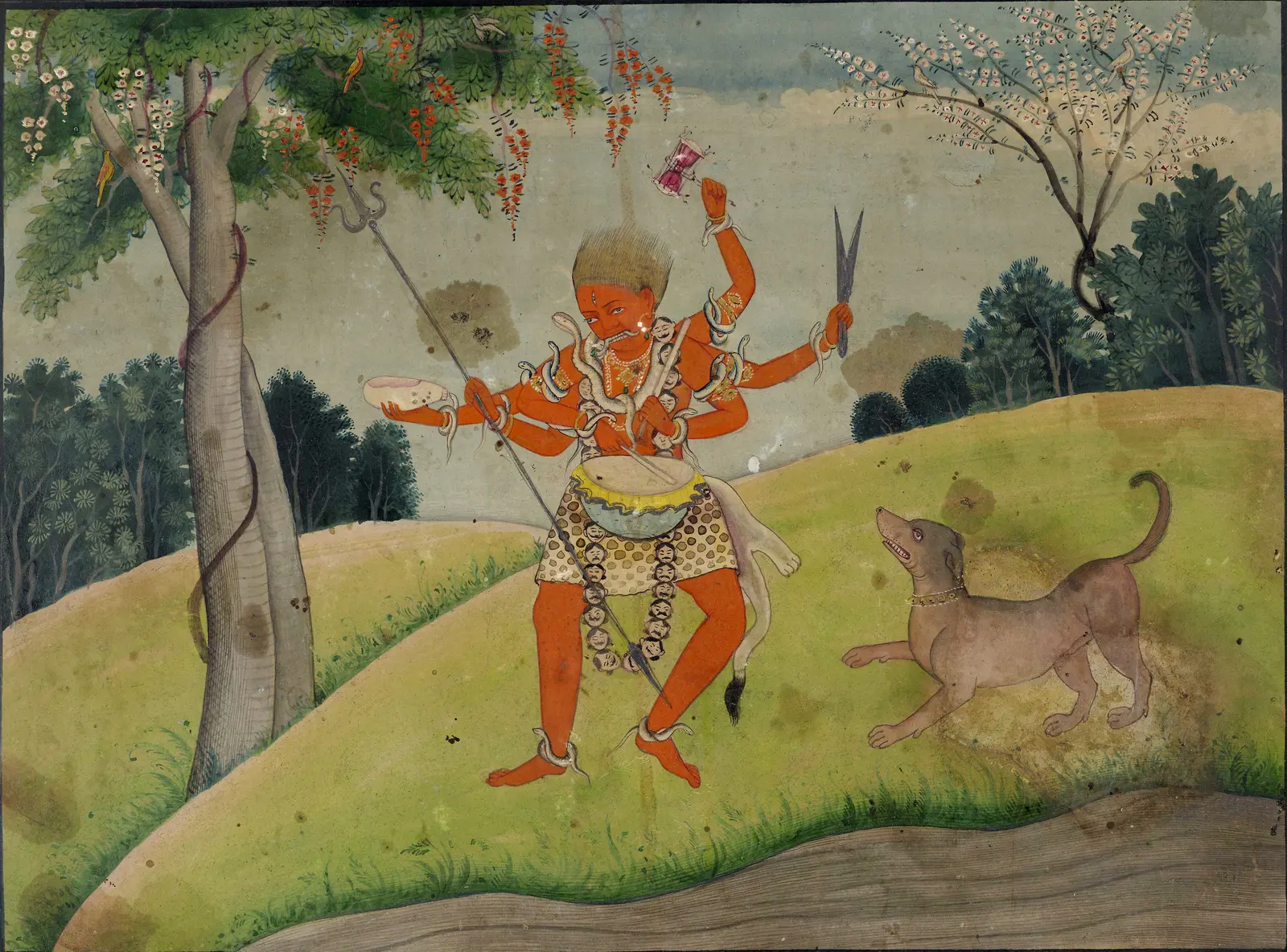
In Kashi, Vishwanath is the king and Kaal Bhairav is his Kotwal. The belief is that no one may enter, stay in or leave the city without his permission, and that he keeps an account of everything done within it. Pilgrims therefore treat his darshan as part of the Kashi yatra itself, and the temple priests say a pilgrimage to Vishwanath remains incomplete without it. The custom reaches into public life as well. News reports describe how officers posted to Varanasi come here for darshan before taking charge, and the Prime Minister offered prayers at the temple before filing his nomination from Varanasi in May 2024. The Kotwali police station of the city stands close by in Vishweshwarganj, and it is widely reported that a chair is kept there for Baba Kaal Bhairav as the real officer in charge.
Temple and the Deity
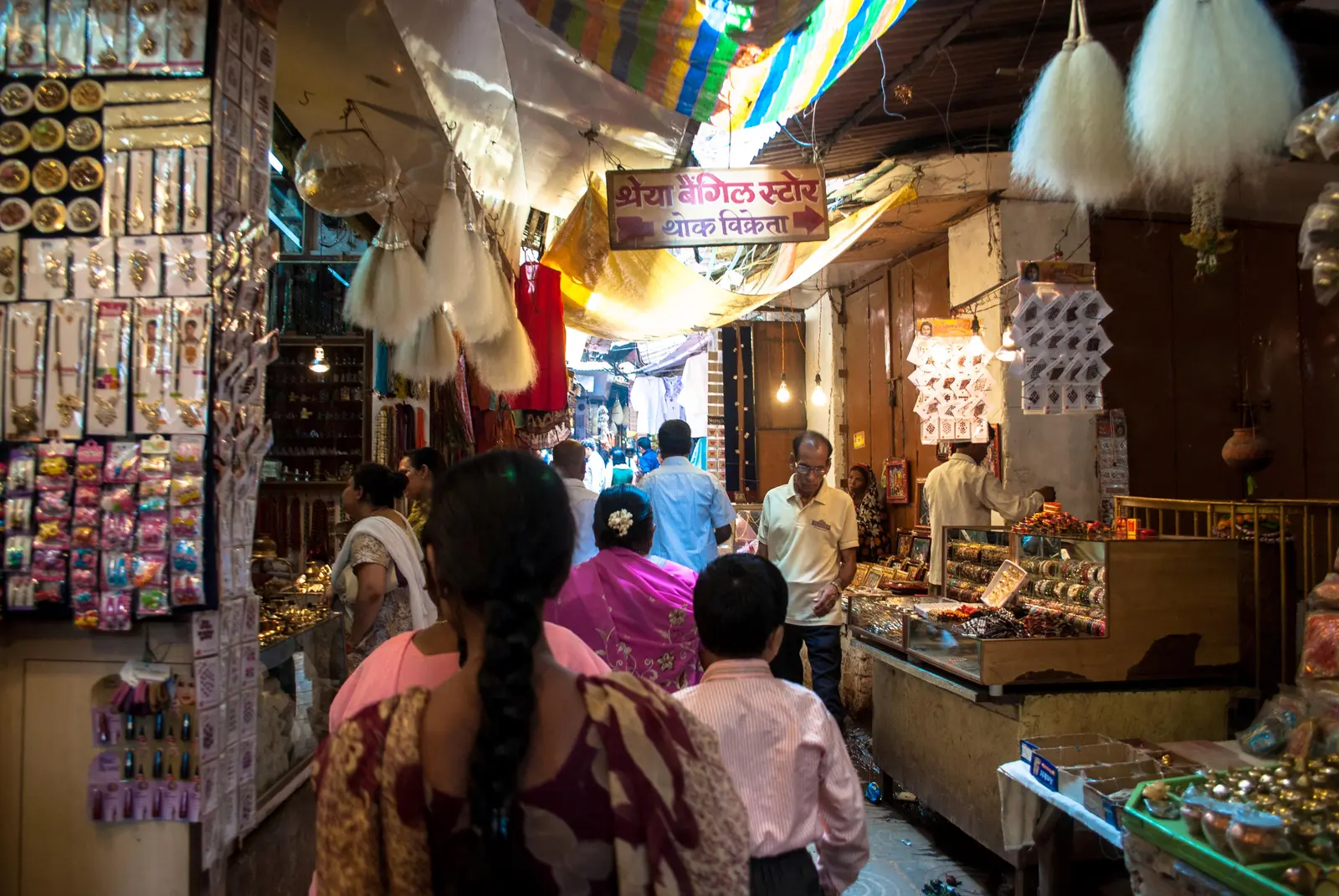
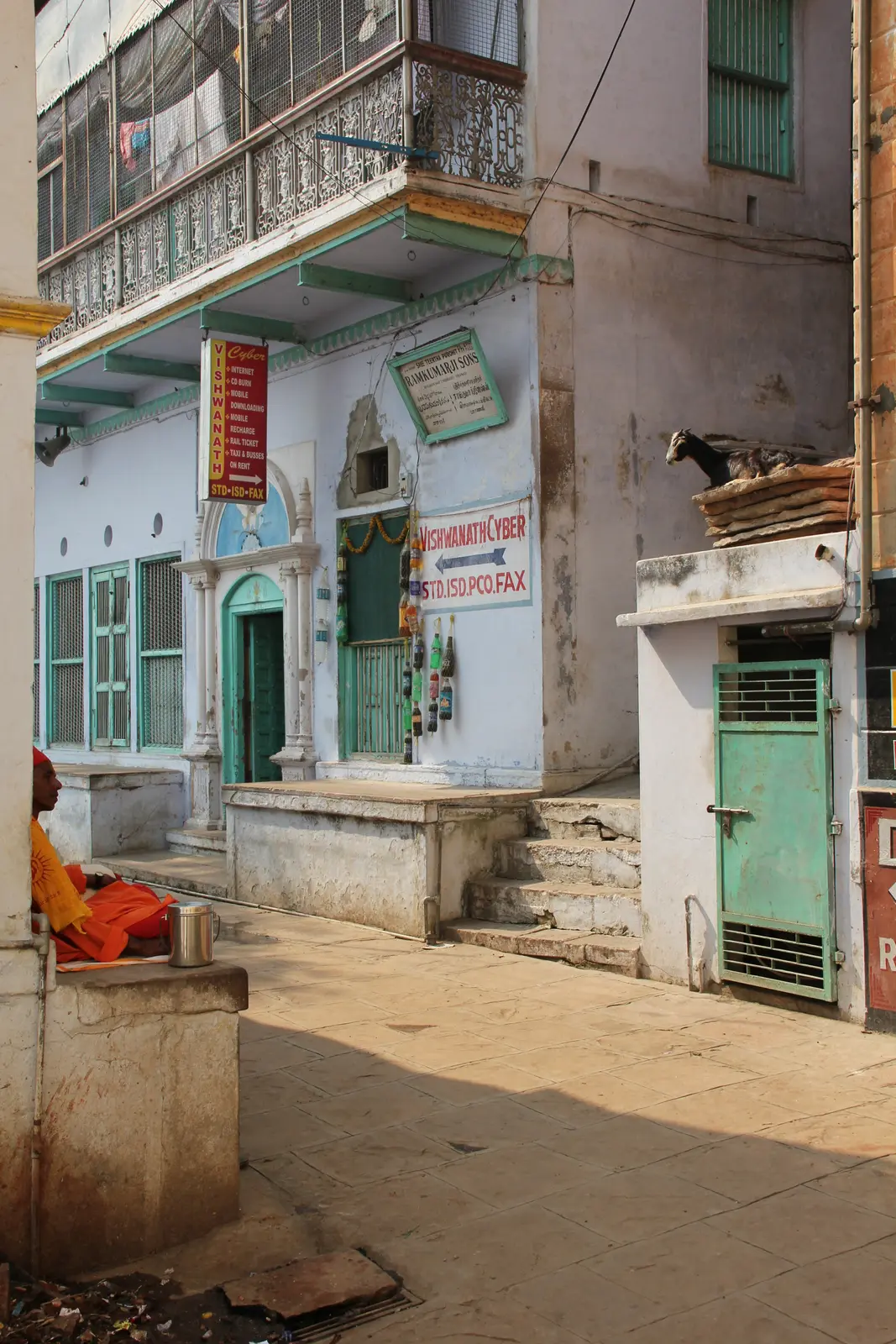
The temple is reached on foot through narrow lanes lined with shops selling flowers, oil and black threads. A doorway guarded by a figure of the dog, the vahana of Bhairava, opens into an arcaded courtyard of about 17 by 13 metres, with the small main shrine at its centre. The image is described as that of Kaal Bhairav seated on a dog and holding a trident, wearing a garland of skulls. In practice the body of the image stays draped in cloth, and only the silver face, garlanded with flowers, is visible through the doorway of the sanctum. Around the courtyard are smaller shrines of Devi, Hanuman, Radha and Krishna, Parvati and Ganesha, and a large slab of the Navagraha on which each of the nine planets has its own altar. An image of Kshetrapal Bhairav is noted at the rear door of the temple.
Customs: Danda, Black Thread and Offerings
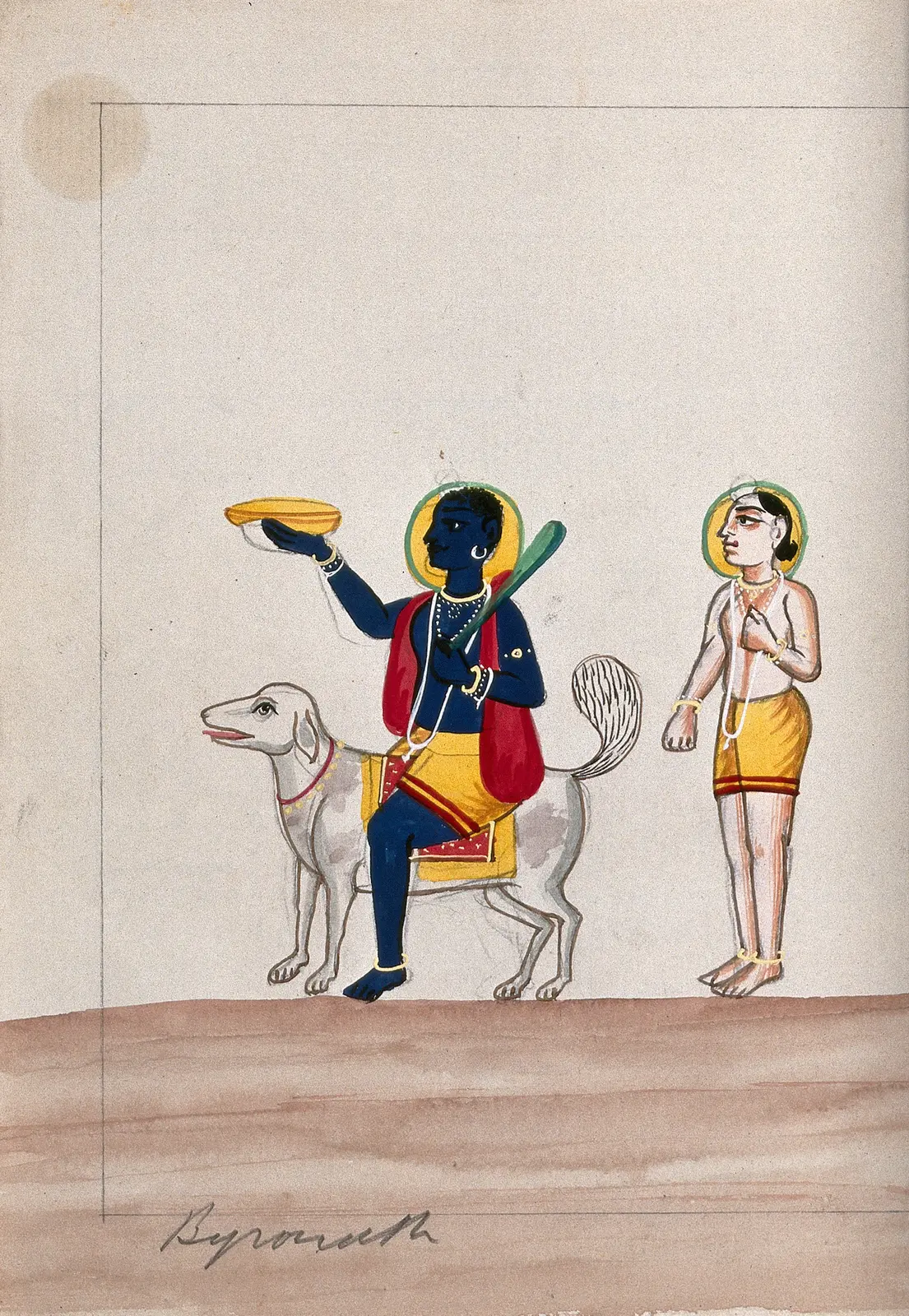
Three customs mark a visit here. The first is the danda. Bhairava carries a club of peacock feathers as the staff of his office, and in the temple a priest taps devotees on the back or head with a bundle of peacock feathers. It is taken as the Kotwal's blessing, believed to drive away illness, the evil eye and other troubles. The second is the black thread, called ganda or Bhairav raksha sutra, which is blessed at the temple and worn on the wrist or around the neck, and is often tied on children, for protection. The third is the offering. Mustard or sesame oil, black sesame, flowers, urad vadas and a blue garland are the usual gifts, and many devotees light a lamp of mustard oil. Liquor is also offered to Baba by those who follow that tradition, and it figures among the offerings at the annual shringar; it is entirely optional. Many devotees also feed the dogs around the temple, since the dog is Bhairava's own mount.
Religious Significance
Kaal Bhairav is worshipped above all for protection. People come to be freed of fear, of illness and the evil eye, of court cases and of troubles they attribute to the planets, and a scholar of the city's traditions notes that he is honoured for protection, health and well-being rather than for liberation. Sundays and Tuesdays are held to be his special days, as is the Krishna Ashtami of every month, known as Kalashtami. Kashi is also guarded by the Ashta Bhairava, eight forms of Bhairava posted in different quarters of the city, and Kaal Bhairav is regarded as their chief. The temple is among the busiest in Varanasi. A local newspaper reported in December 2025 that sixty to seventy thousand people come on an ordinary day and several times that number on Sundays, when queues stretch from the temple lanes to the Vishweshwarganj and Maidagin crossings.
The Courtyard and Its Smaller Shrines
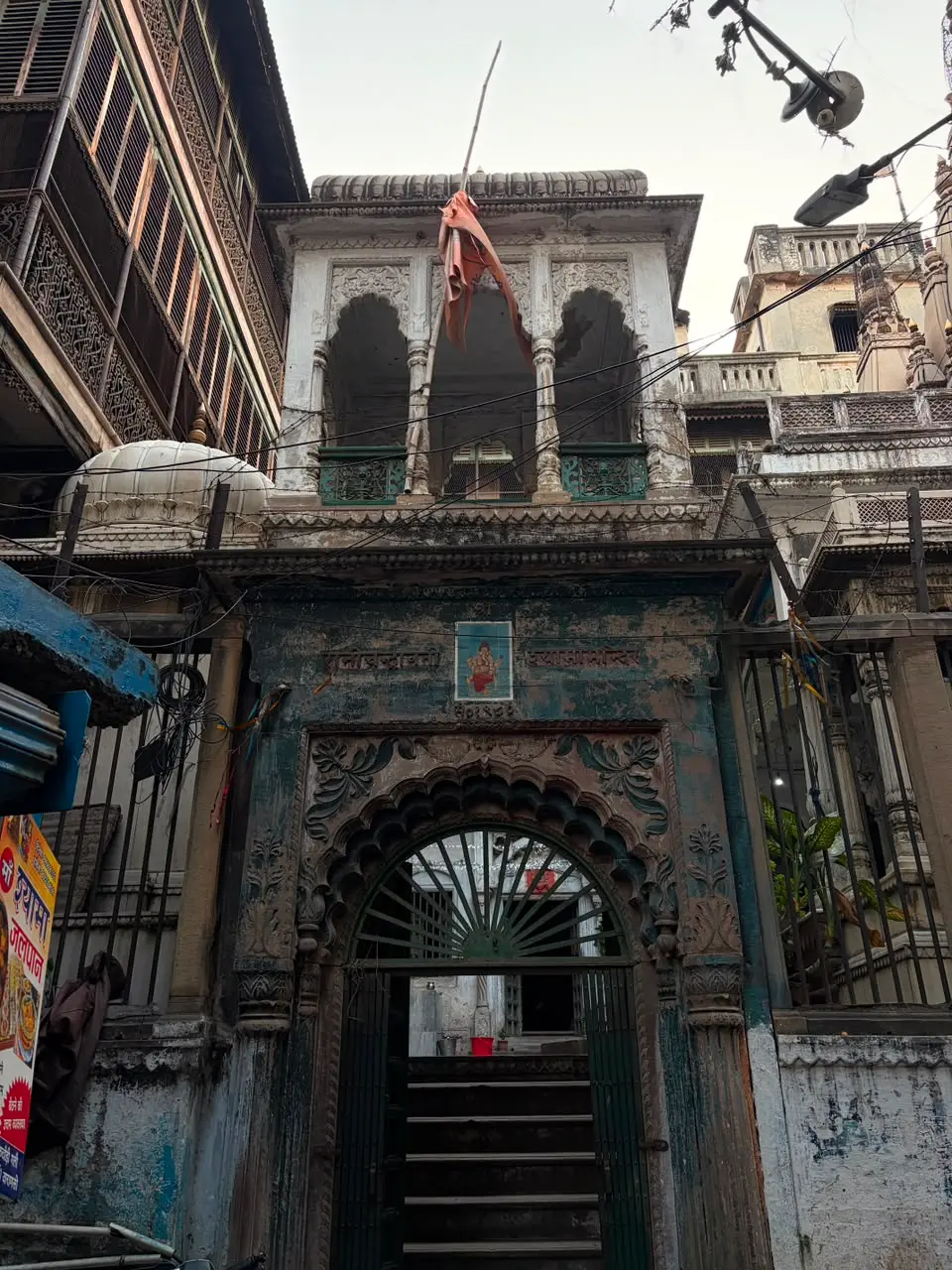
The temple is small and is hemmed in on every side by houses. A study by the architectural historian Niels Gutschow, quoted on the Cultural Heritage of Varanasi site, measures the arcaded courtyard at 17.4 by 13.4 metres, with the main shrine standing in the middle and facing almost exactly north. The visitor comes in from the lane through a door guarded by the dog, Bhairava's mount, and stands on a pillared porch in front of the sanctum for darshan. The same study notes that the north-eastern corner of the arcade has been taken over by a neighbouring house and that two other corners have become store-rooms, so the courtyard is tighter than its plan suggests.
Gutschow's plan of the compound numbers fourteen points of worship. Besides Kala Bhairava himself it marks two images of Batuka Bhairava, Kala Madhava together with Shmashana Bhairava, a linga listed as Rameshvara, Hanuman with Rama, Unmatta Bhairava, Bhairaveshvara, Brahma, the Navagraha, Shamaneshvara, a group of Rama, Lakshmana and Hanuman, Durga, and a well called Kalakupa. The doorway of the sanctum is framed by Batuka Bhairava, Shmashana Bhairava and Kala Madhava, a form of Vishnu visited on the pilgrimage to the sixteen Vishnus of Kashi. The scholar Diana Eck, describing a round of the courtyard, mentions shrines of Devi, Hanuman, Radha and Krishna, Parvati and Ganesha, and singles out the large Navagraha slab on which each planet has its own altar.
Matthew Sherring, a missionary who described the temple in 1868, saw much the same arrangement: an entrance on the north, a porch hung with four bells, two doorkeeper images called Dwarpaleshwar in niches on either side of the threshold, a trident with red-painted prongs standing against the wall, and inside a small shrine of copper holding a stone image with a silver face and four hands, with an oil lamp burning beside it. He noted paintings of Bhairava and of his dog on the wall beside the outer door. He was told that the building had been put up more than forty years earlier by Baji Rao of Poona on the site of a smaller old temple, which fits the inscription date of 1817. Just outside the quadrangle on the south he recorded a shrine of worn old images, one of which he took to be an earlier image of Bhairava set aside at the rebuilding, and on the west a small shrine of Shitala. Whether these two outer shrines survive in the same form was not confirmed.
Later changes are also on record. The walls of the temple were faced with marble slabs in 1968. In 1995 raised seats were built between the columns of the arcade for the twenty families who hold rights in the management of the temple, and from these seats they sell strips of black cloth and other articles of worship. Many small marble slabs set into the pavement and plinths are memorials given in the name of the dead. Inside the sanctum the study notes a damaged stone slab, about 90 by 60 centimetres, whose central figure has been chiselled away, with two attendant figures still faintly visible under a thick coat of vermilion.
The Chair at the Kotwali Police Station
The Kotwali police station of Varanasi stands at Vishweshwarganj near Maidagin, about three hundred metres from the temple in a straight line. It is the station in whose area the temple falls, and it has a custom of its own. News reports from 2019 describe how a picture of Baba Kaal Bhairav is kept on the main chair of the officer in charge, while the inspector posted there works from a second chair placed beside it.
ETV Bharat, which reported from the station in April 2019, quoted the inspector then in charge as saying that the picture had been on the chair for a long time and that every officer posted there sits next to it. The mahant of the temple told the channel that the practice was begun by an inspector many years ago. The report adds that Baba's name is written on the outer walls of the station, and that on the plaque of the room built for public hearings his name was placed above that of the senior superintendent of police. Patrika reported in July 2019 that the inspector bows to the picture before sitting down and that flowers and a garland are offered to it every day.
Around this custom a body of belief has grown. The inspector told reporters that crime in the area came under control after the picture was placed there, and that when an officer has tried to move it some serious incident has followed. Patrika also recorded the saying that senior officers do not inspect this station, because the Kotwal himself is its master, and the story of an officer who did inspect it and was transferred by evening. These are beliefs held and repeated locally, and they are reported here as such.
The chair is one part of a wider practice. According to the same reports and to the mahant, quoted again in 2024, officers posted to Varanasi, from the district magistrate and the police commissioner downwards, come for darshan of Kaal Bhairav before they take charge. Political leaders follow the custom too. The Prime Minister offered prayers here on 13 December 2021 before inaugurating the Kashi Vishwanath corridor, and again in May 2024 before filing his nomination from Varanasi.
Kaal Bhairav in the Kashi Khanda
The story of Kaal Bhairav is told in the Kashi Khanda, the part of the Skanda Purana devoted to Kashi. In the English translation by G. V. Tagare it is chapter 31, titled the Manifestation of Bhairava; the chapter calls itself Bhairavotpatti, the birth of Bhairava. The sage Agastya asks Skanda who the Bhairava established in Kashi is, what his form and work are, and when he should be worshipped, and the chapter is Skanda's answer.
On Mount Meru the sages ask Brahma which single principle is imperishable, and Brahma, deluded, names himself. Kratu, a form of Narayana, makes the same claim. The four Vedas, asked to settle the matter, each declare Shiva supreme. When Brahma still speaks arrogantly, Shiva in anger creates a being of terrifying appearance and gives him his names: Kalabhairava, because even Kala, time or death, will fear him; Kalaraja; Amardaka, because he crushes the wicked; and Papabhakshana, the devourer of his devotees' sins. Shiva grants him lasting lordship over Kashi and says that he alone will chastise those who sin there, and that Chitragupta will not keep their account. Bhairava then plucks off Brahma's fifth head with the nail of a finger of his left hand.
Told to carry the skull and go begging as an expiation, Bhairava wanders the three worlds followed by Brahmahatya, the sin of the killing in the form of a fearsome woman, who may go everywhere except into Varanasi. He visits Vishnu, who honours him, and at last enters Kashi. At once Brahmahatya cries out and sinks into the netherworld, the skull falls from his hand, and the place becomes the tirtha of Kapalamochana. The text says that Bhairava stayed there, eating up the sins of his devotees.
The chapter closes with rules of worship that are still the calendar of the temple. One should fast and keep awake before Kalabhairava on the eighth day of the dark half of Margashirsha, and worship on that day is said to remove the obstacles of a year. Worship on the eighth and fourteenth lunar days and on Sundays and Tuesdays is praised, eight circumambulations a day are recommended, and a bath in the water called Kalodaka is to be taken before visiting him. The text warns that those who are devoted to Vishweshwara but not to Kalabhairava meet obstacles at every step in Kashi. A later chapter, number 72, names the eight Bhairavas who guard the quarters of the city.
The Danda, Dandapani and the Black Thread
Two things every visitor takes from this temple are a tap from a bundle of peacock feathers and a black thread. Both are old customs. Matthew Sherring, writing in 1868, saw a priest seated on either side of the porch with a rod of peacock feathers, with which he made passes over children, women and others to keep away evil spirits, and a cup made from a coconut shell beside him for coins. E. B. Havell in 1905 and Rajani Ranjan Sen in 1912 describe the same light tap, and Sen remarks how eagerly elders held up small children to receive it.
The explanation given then and now is that Bhairava is the Kotwal and the feathers stand for his danda, the staff of his office. Diana Eck writes that the club of peacock feathers carried by Bhairava in his images is wielded on his behalf by a priest, and that to be struck or dusted with it is a blessing believed to keep away sickness and pain. The older writers add a second idea, that the tap is a token punishment for one's faults which at the same time clears the devotee of them.
The staff also has a shrine of its own. A short walk east of the temple is Dandapani, where an upright stone some four feet high is worshipped as the club of Bhairava. Accounts from 1868 to 1912 say that it is given a silver mask on special days, that it draws its crowds on Sundays and Tuesdays, and that the priest there too taps worshippers with peacock feathers. Sherring pointed out that Dandapani, 'staff in hand', is properly the name of an attendant of Shiva, and that over time his emblem came to be worshipped as a deity in its own right. The same guidebooks place a Navagraha shrine between the two temples and, beside Dandapani, the Kal Kup or Well of Fate, into which the sun shines at midday through an opening above.
The black thread is called ganda, or Bhairav raksha sutra. Eck describes it as a necklace of twisted and braided black threads that is blessed by Bhairava and tied round the neck or wrist as an amulet against illness and evil spirits. She adds that ash, bhabhut, is put on the forehead and that devotees carry a little home to use until their next visit. Hindi accounts say the thread is given to children in particular, to free them of fear. The families who serve the temple sell black cloth strips from their seats in the courtyard, and the lanes outside are lined with shops selling threads. No price list is published. The police action of December 2025 and May 2026 was directed at people who intimidated pilgrims and demanded large sums for the tap of the danda, the thread or quick darshan.
Bhairav Ashtami at the Temple
Bhairav Ashtami falls on the eighth day of the dark half of Margashirsha (Aghan), in November or December, and is kept as the day on which Bhairava appeared. The Kashi Khanda asks devotees to fast on this day and to keep awake through the night before Kalabhairava. In 2024 the day fell on 23 November and in 2025 on 12 November.
At the temple the day begins before dawn. Reports of the 2024 festival describe a special shringar of Baba at daybreak and another at night, a special aarti with a lakh and a quarter of wicks, and worshippers coming from morning until late at night. A report of 2018 describes a panchamrit bath of the image. The mahant, speaking in 2024, recommended one offering for this day in particular: mustard oil is passed around one's own body and then offered to Baba, which is believed to remove obstacles and the evil eye. A pradakshina of the eight Bhairavas of the city was also held on the day in 2024.
For some years the birthday of Baba was marked by cutting a very large cake: 601 kg in 2018 and, by one report, 1,100 kg in 2024. That custom has been stopped. Soon after the 2024 festival a video of a visitor cutting a cake inside the sanctum spread on social media, and on 1 December 2024 Aaj Tak reported that the mahant family and the temple management had decided that no cake would be cut in the temple again. Laddus and other prasad are to be offered and distributed on festivals instead, and photographs, video and reels inside the sanctum were banned by the same decision. No report describing the 2025 celebration at the temple was found.
In every other month the dark eighth is kept as Kalashtami on a smaller scale. Amar Ujala's report of the Kalashtami of February 2025 gives a picture of such a day: a panchamrit bath, shringar and aarti, offerings of fruit and sweets, and a queue that lasted from the mangala aarti until night and reached back to the Vishweshwarganj crossing. Anyone who comes on Bhairav Ashtami itself should expect a much longer wait.
Kapal Mochan and Laat Bhairav
The legend of Kaal Bhairav ends at Kapal Mochan, the place where the skull of Brahma fell from his hand. Tradition identifies it with a large stepped tank in the north of the city, on the road from Kazzakpura towards the old bridge. It is also called Bhairo ka Talab, the tank of Bhairava. Its stone steps and walls are credited to Rani Bhawani in the eighteenth century, and bathing there is believed to free a person from the sin of brahmahatya. An older Amar Ujala report found the tank silted and neglected, with a local committee trying to clean it.
On the terrace above the tank stands Laat Bhairav, who is counted as Kapali Bhairav among the eight Bhairavas of Kashi. The laat is the stump of a stone pillar, cased in copper and painted red. Guidebooks of the early 1900s record its history: a temple of Bhairava once stood here, it was pulled down in Aurangzeb's time and a mosque was built at the spot, and in 1809 the pillar itself was thrown down and broken during a riot between Hindus and Muslims, after which the pieces were gathered and encased. E. B. Havell believed the pillar to be a fragment of an Ashokan column; the sources read for this page do not settle that. The terrace still holds both the pillar and a place of Muslim prayer, and security is heavy on festival days.
Laat Bhairav has a festival of his own, the wedding of Baba Laat Bhairav with Bhairavi on the full moon of Bhadrapada. A silver mask of the deity is dressed as a bridegroom with a wedding crown and taken out on a chariot as a barat. In September 2026, Amar Ujala reported, the procession set out from Inna Mai ki Gali in Vishweshwarganj, came by the Vishweshwarganj crossing to the Kaal Bhairav temple, where an aarti was performed, and then went on through the northern lanes to Kapal Mochan. The three-kilometre route took about ten hours. At the tank the wedding rites were performed, the mask was carried five times round the Bhairavi well and then placed on the image.
For a pilgrim the two places belong together. Kapal Mochan is where the wandering ended and the sin fell away, and the temple at Bhaironath is where the Kotwal took up his post. Laat Bhairav is about two kilometres north-east of the Kaal Bhairav temple, near the railway crossing, and is usually reached by auto or e-rickshaw. Accounts do not agree in every detail about where the skull fell. The mahant of the Kaal Bhairav temple tells it this way: Bhairava was first established as Kapal Bhairav where the skull dropped, made a tank and bathed there, and then came at Shiva's word to the mound where the present temple stands.
The Temple in the News, 2021 to 2026
The custom of taking the Kotwal's leave is followed at the highest level. On 13 December 2021 the Prime Minister offered prayers at the Kaal Bhairav temple before inaugurating the Kashi Vishwanath corridor, and on 14 May 2024 he came again before filing his nomination from Varanasi. News reports in 2022 and 2024 quote the mahant as saying that the district magistrate, the police commissioner and other officers come for darshan before they take charge.
The temple's own rules changed at the end of 2024. After a video of a cake being cut inside the sanctum drew criticism, the mahant family and the management announced on 1 December 2024 that cakes would no longer be cut in the temple and that photographs, video and reels would not be allowed in the sanctum. Members of the family told Aaj Tak that the restriction on photography was to be extended to the whole premises, and that people going into the sanctum would be watched more closely. The Kashi Vidvat Parishad welcomed the decision.
Crowds and touts have been the other recurring story. Amar Ujala reported in December 2025 that sixty to seventy thousand people come on an ordinary day and about three lakh came on one Sunday, with queues from Maidagin to Vishweshwarganj and barricading by the Kotwali police. In the same month the police arrested ten touts who were charging pilgrims Rs 500 to Rs 1,100 for direct darshan. In May 2026 Deccan Chronicle reported that eleven more alleged touts had been detained in the temple area and that CCTV cameras were being installed across the premises, covering the entry points, with the support of the temple priests.
The lanes themselves are due to change. In September 2026 Bharat Petroleum signed an agreement worth Rs 21.21 crore with the Varanasi Development Authority to restore heritage routes in the old city, including the route from the Thatheri Bazaar heritage lane to the Kaal Bhairav temple. The work is to include stone paving, restoration of facades, heritage-style lighting, signage and street furniture, and is scheduled to take 36 months. Visitors in the coming years may find parts of the approach under repair.
At a glance
- Deity
- Kaal Bhairav, a fierce form of Shiva
- Revered as
- Kotwal (guardian and magistrate) of Kashi
- Image
- Silver-faced image; the dog is his vahana
- Known for
- The black protective thread and the blessing with the peacock-feather danda
- Scriptural mention
- Kashi Khanda of the Skanda Purana
- Present structure
- Maratha period; an inscription is reported to date it to 1817 (Baji Rao II). Other accounts differ
- Location
- Bhaironath, Vishweshwarganj, about 1.5 km north of Kashi Vishwanath
- Main festival
- Bhairav Ashtami (Kaal Bhairav Jayanti)